Top 10 Garden Resource Blogs 2011

By Arron on Apr 27 2011 | 1 Comments


With the summer sun well upon us, it's time for the avid green fingered gardeners to prepare their garden.

In order to find the best community base to prepare us for the summer, we have launched a competition to find out the best gardening blog of 2011!

After months of research the following 10 blogs & communities were identified (in no particular order):


1) The Guardian Gardening Blog

The Guardian's Gardening blog has been around for many years, and is regularly updated by popular gardening editors with useful gardening related content.

Find one of their recent posts here.


2) Digging

This United States based gardening resource is owned by Pam, a Texas based gardener. She has developed her garden environment for many years, and regularly posts content on her gardening journey.

Find one of her recent posts here.


3) Veggie Gardening Tips

Veggie Gardening Tips is a gardening portal for useful tips and advice on how to grow vegetables naturally and organically, the blog has some excellent guides on how to grow certain vegetables effectively.

Find one of their recent posts here.


4) Gardeners World Blog

Gardeners World is a BBC owned gardening portal. World gardening experts regularly update the blog with essential tips and advice for gardening related matters, making it a very trusted resource for gardening enthusiasts.

Find one of their recent posts here.


5) GrowsonYou

GrowsonYou is a gardening based community & blogging resource where members can share their gardening tips and tricks with one another.

Find one of their recent posts here.


6) Guerilla Gardening

Guerrilla is an interesting community base, which encourages the creation of gardening in public areas such as on side streets and roundabouts. The blog is frequently updated by members who have come across attractive looking public gardens and flower patches.

Find one of their recent posts here.


7) Cold Climate Gardening

Cold Climate Gardening is a unique gardening resource which offers tips and advice for gardeners who live in cold climates. The blog has a wide range of posts relating to cold climate gardens and how they can be brought to life despite their unfortunate cold temperatures.

Here is one of their recent posts here.


8) Gardening Gone Wild

Gardening gone wild is an internationally recognised gardening blogging community in which aims to 'inspire and inform' its readers with a global perspective on all things gardening.

Find one of their recent posts here.


9) A Way to Garden

A Way to Garden is maintained by garden enthusiast Margaret Roach, she was earlier awarded best garden book of the year in 1998, and her success has continued with her gardening blog, which has a high number of regular subscribers.

Find one of her recent posts here.


10) Garden Rant

Garden Rant is a well known gardening blogging network which has won a number of best blog awards in the past. The blog is regularly updated by four gardening editors who have created a huge following among the gardening network.

Find one of their recent posts here.


To cast a vote for your favourite gardening resource, simply use the form below to vote.

The end date for the competition is  29th June 2011, so make sure your vote counts! Once the results are collected, the top garden blog of 2011 will be revealed!


Post info

Tags:
Categories: Garden , gardening , General , Summer

Winter Care for Garden Birds

By Arron on Oct 14 2010 | 0 Comments

Winter months can provide difficult times for many insects and wildlife that visit our gardens, food can be particularly hard to come by as the cold and frost starts to bed in. These gloomy conditions are particularly harmful to many species of birds; the outcome of these conditions can be fatal.  Recent studies have shown that birds can use up to 10% of their body fat during a cold winter’s night, meaning that an early morning scurry for food left out on the lawn to be essential to their survival, unless able to feed well every day to replenish lost body fat, a long drawn out cold spell can be disastrous for our feathered friends.

What to feed

Food should be put out on a daily basis to give birds the best possible chance of survival.

-          - Feed twice daily; first thing in the morning and early in the afternoon this is when the birds will crave food the most.

-          - Introduce hanging feeders to hold various seed mixes such as; peanuts, sunflower seeds, and nyjer seeds.

-          - Utilise a bird table for bread, scraps, cheese, and pastry.

-          - Ensure a fresh water supply is available

-          - Bird cakes and fat balls – very good because they provide high fat content, giving birds the energy they need.

Where to place a bird table in your garden

First of all it is essential to place the bird table away from fences or large hedges where cats can easily get to. The table should be placed near a small bush towards the rear of the garden, this will allow the birds to be undisturbed and give them avid space to lookout for other birds on the lookout for food. If possible bird tables should be placed as high as possible to avoid cats and other wildlife climbing onto it, to further avoid the risk of other wildlife attacks, prickly bushes should be placed around the bottom of the table.

Plant wildlife-friendly vegetation, such as prickly bushes and thick climbers in the garden to provide secure cover for birds. These should be close enough to where birds feed to provide cover, but not so close that cats can use it to stalk birds.  This kind of planting may also provide food and nesting sites.

The Need for Water

Like all living things, birds need a regular supply of water to survive. A bird bath mounted on a plinth, a ceramic water dish, or hanging water dishes are some of the most common uses to hold water for birds. It is also important that the edges of each of the equipment are slightly sloping with rough sides to help them grip on.

Post info

Tags:
Categories: garden science , gardening

The Benefits of Beekeeping

By Arron on Aug 18 2010 | 0 Comments

The thought of beekeeping seems somewhat strange when we think how irritating these insects can be when their buzzing around us in summer. However the act of beekeeping has been around for centuries. Beekeeping (also known as apiculture) was first introduced by the Egyptians who would consider honey one of their favourite foods; they would keep many colonies of beehives in order to produce honey which they would consume on a daily basis.

Bees are not only useful for their honey, but notably for agriculture, bees provide high value pollination to plants and flowers around the garden environment. Without bees there would be a considerable decrease in the way common crops grow, and they would more often than not die due to a lack of pollen. Garden enthusiasts will tell you that having one or two beehives in the garden would see a considerable improvement in the way crops grow throughout the summer.

Notably, other obvious reasons for beekeeping is for their production of beeswax and royal jelly, both have high commercial values, and can be useful for many everyday resources, such as; shoe polish, candles, and cosmetics.

Beehive Storage

An apiary or (bee yard) is where the bees store their honey, and is their colony, this is essentially where the bees work their magic in producing these highly useful resources. The first steps for creating the apiary is to utilise wooden boxes which contain wax sheets, the bees will use the wax from the sheets to create their honeycomb. Typically, the queen bee will sit within the colony and order her worker bees to produce the honey. Beforehand, special scents are used in order to

attract queen bees to the nests. Throughout the course of the day, bees will collect pollen and nectar from flowers to keep them nourished for carrying out their working tasks. The nectar they collect is then reused and stored within the honeycomb, in order to produce honey.

Beekeepers Beware

Before starting your beekeeping hobbies, it is strongly advised that you take professional advice from your local community and authorities. As well as being quite rewarding, beekeeping can be a danger to humans in particular. The correct clothing should be worn at all times when near a colony, as the consequences could be quite uncomfortable, and in some cases fatal. Storing equipment within a garden shed will ensure you can easily find your protective clothing when needed.  It is also advised to use a smoker; this will prevent the queen bee from sending out signals to other bees to start feeding, and will allow you to perform inspection and maintenance work on the colonies.

Post info

Tags:
Categories:

The Potting Shed Resource

By Arron on Jul 22 2010 | 0 Comments

Most avid gardeners will agree that having their gardening resources stored in one place, to be a very efficient way of ensuring gardens are kept uncluttered and organised.

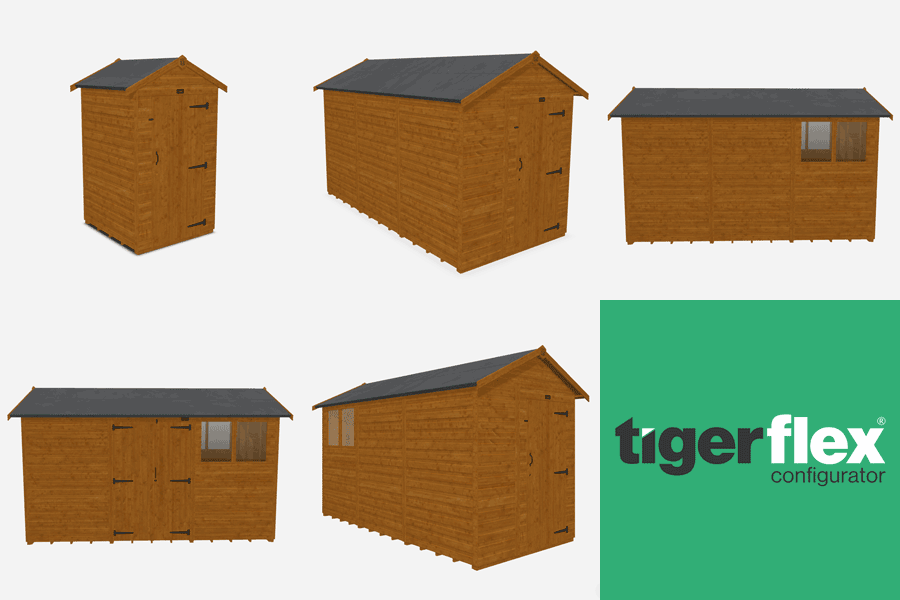
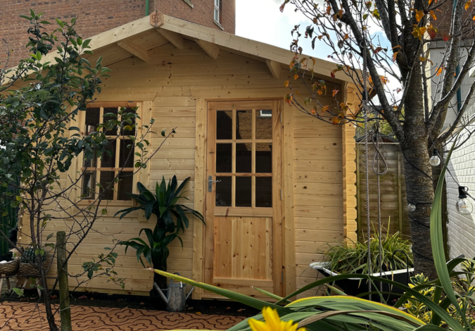
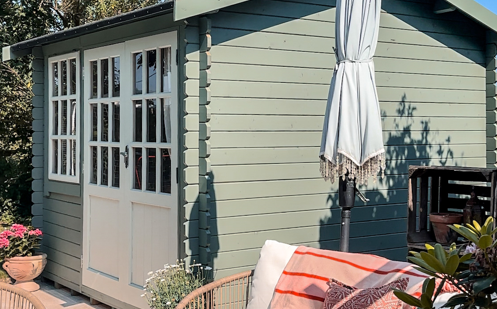
To keep your garden environments free of untidiness, you should consider purchasing a potting shed. These garden structures allow for effective methods of storage, from typical garden tools such as trowels, shears, and spades, to much larger items such as tractors and mowers, depending on the size of your potting shed.

As well as storing everyday gardening equipment, the potting shed can be a place for common gardening tasks such as; re-potting plants ready for the summer months, and all round seasonal care such as dead heading, pruning and watering. The potting shed can be a very effective and time consuming purchase for any keen gardeners, all excess soil and mess can be cleaned up with minimal effort. Those gardeners who suffer from bad backs will tell you that it’s much easier to clean a potting shed, rather than having to scramble around the garden with a brush.

Before making any decisions to acquiring a potting shed it is advised that you analyse what space you have free in your garden, and where the best possible place for it to be situated should be. Placing your potting shed in a well lit area during the summer months is essential if you want plants to grow in there.

The majority of potting sheds nowadays come with at least one shelf giving you the advantage of sorting items instantly. Other useful resources such as workbenches and storage cabinets will allow your potting shed to be well equipped for both storing items, and for working on general gardening tasks.

Greenhouse Vs Potting Sheds

When we compare the greenhouse and the potting shed, there isn’t too much difference between them. When analysing the usability of the greenhouse it has only one main task, a storage point for plants to grow. Whereas the potting shed can infact perform this task and be a useful storage and working area for avid gardeners as well.

It has said to divide opinion which structure can store plants more efficiently throughout seasonal change; I would like to say however that a potting shed could infact sustain the growth of plants much better than a greenhouse throughout seasonal change. Some gardeners have found that winter care for plants in greenhouses to be more difficult as plants need to be covered with fleece on a regular basis, on the other side potting sheds have been found to be more effective in cold winter months, by utilising propagators and heaters to keep the shed temperatures warm on a regular basis.

Look here for a range of potting sheds

Post info

Tags:
Categories:

Deforestation - The Impact On Our Environment

By Arron on Jun 30 2010 | 0 Comments

Deforestation

Less than 100 years ago we would see vast areas of green land and outspread woodland areas where families and couples could enjoy their summer weekends, without the hustle and bustle of loud communities, and heavy roadside usage. Now it seems these days are somewhat outdated, and a continuation of environmental and technological change is increasingly upon us.

For centuries now we have seen forests all over the world becoming victim to deforestation. The changes to these climates are having a huge effect on our environment, and many people are still unaware as to the consequences.

Deforestation has been apart of the way we live for centuries now, but over recent times it has caused massive concern all over the world. The state of our environment is vastly becoming taken for granted. It is thought that 30 percent of the earths land is covered by forests, but for how much longer?


What are the causes of deforestation?

  • We are the basis of our own downfall when it comes to deforestation, the main causes include;
  • Agriculture & Cattle - cut down to create areas of land for grazing cattle
  • To grow crops - Used by farmers to grow their own produce
  • Used for Urban and Construction Purposes- Used for building materials such as paper, furniture & log cabins etc
  • Fuel - Used for firewood and charcoal for heating and cooking purposes.


So what are the effects of deforestation?

One of the main threats to the world is the greenhouse effect - in which gives out harmful gases to the atmosphere, namely Carbon Dioxide .Deforestation subsequently helps these harmful gases swarm around our environment.

Trees as we know are important to our environment, without them, we wouldn’t have paper, oxygen, & everyday resources that we use day in day out.

But there is underlying reasons why forests are essential to our well being. One of which is Photosynthesis. Forests absorb a large number of sunlight & carbon dioxide which in turn can be used for Photosynthesis, not only this but, deforestation actually harms the environment because it allows carbon dioxide to be let out into the environment. Trees themselves take in carbon dioxide and release Oxygen which is essential to all living things, also burning down forests can emit carbon dioxide into the atmosphere which is locked in the trees wood.  

Other effects such as washing away of soil & Biodiversity contribute heavily to the act of deforestation.


What does the future hold?

It is thought that approximately 13 million hectares of the world's forests are lost due to deforestation, and these numbers don't seem to be halting. Deforestation is of major concerns to most countries in the world, and its constant increase over the last 20 years has done our climate more harm than good,

But due to its effect on people's livelihood and money, it’s hard to see it dropping anytime soon.

The tropical rainforests are infact the main heartbeat for human well being; since all modern medicines come from these environments - It is somewhat hard to believe that we will see a distinct difference any time soon, but if the growth of deforestation continues, it could infact kill us.

One aspect that could help the threats of global warming & the green house effect is planting new trees when old ones are destroyed, this in turn could balance the act considerably. However no formal procedure has yet been discussed.


Post info

Categories: gardening

Photosynthesis

By Arron on Jun 24 2010 | 0 Comments

All living organisms need a source of food for their continued existence and well being. The way in which plants obtain food is by producing it themselves through a process called Photosynthesis. In simple terms plants use the raw materials Carbon Dioxide, & Water, to produce Glucose, and Oxygen both essential to any living being not just plants.

These raw materials (Carbon Dioxide & Water) enter the cells of the leaf, which produces Glucose & Oxygen, and then leaves the leaf.

In more complex and mathematical terms the following formula can be associated with the Photosynthesis process

6H2O + 6CO2 → C6H12O6+ 6O2

A question which crops up heavily is why are the leaves of plants green?  

Well the answer is quite straight forward; due to the presence of the chemical Chlorophyll in the plants leafs, during the process of Photosynthesis, Chlorophyll absorbs red and blue wavelengths. The colour green itself is reflected from these wavelengths, making the colour appear green to the naked eye.


Chlorophyll itself is an important factor to the photosynthesis process, as it catches the rays of the sun, and coverts it to glucose of which contains sugar - which in turn provides useable energy.

Photosynthesis – Step by Step

In more complex terms the diagram represents each individual cell within the leaf of a plant, at first glance it does look quite overwhelming – however here is a short and precise guide as to which cells are involved with Photosynthesis:

-     The water given to plants (e.g. when they are watered) travels up the root of the plant, (stomata) and through the cell Xylem.The job of this cell is to simply transfer the water from the roots to other parts of the plant

-     Carbon dioxide cannot enter through the top layer of the leaf (Cuticle) and so can only enter through the stoma

For further reading on Photosynthesis visit - http://en.wikipedia.org/wiki/Photosynthesis

Post info

Categories: gardening , General

The Fascination with Orchids

By Arron on May 26 2010 | 0 Comments

If you have ever wondered how roses have a vast family of species. Take a moment to think about the Orchid family of flowers, which are said to have an astonishing variety of around 30,000 known species, larger than any other known plant. These fascinating plants can grow in any given climate from the sustained warmth of the tropics to the cold temperatures in North America, due to their capabilities of adapting to such conditions they have formed a huge family of species all over the world. Many types of Orchids can be seen within the tropics of the jungle; they tend to grow on the trunks or on the branches of trees.

The Orchid is said to signify many things; love, wisdom, beauty and thoughtfulness. Notably, a pink Orchid is said to convey affection, and is more commonly used for celebrations such as mother’s day.

The continued fascination of the Orchid goes back 100’s of years when they were hunted and collected. Orchids would be looked after on a daily basis, ensuring that the flowers were kept and maintained in the best condition possible. This fascination is known to many gardeners as the ‘Obsession with Orchids’.

 Some of the better known & popular Orchids are:

-          Phalaenopsis

-          Zygomorphic

-          Vanda

-          Cymbidiums

-          Dendrobiums

Orchids have perhaps become quite complex to most, however the structure of these flowers are very similar; they have three sepals and three petals, however the middle of the plant is significantly different across all species.

 Categories of Orchids

Epiphytic Orchids – These Orchids grown on tree trunks only, they do not harm the tree but only rely on it for support and a healthy span of growth. Due to their formation of growth they do not receive a regular supply of water from the soil, however the Epiphytic unique tissue called velamen in its roots, helps the Orchid store enough water for sustained growth.

Lithophytic Orchids – Can be seen with cracks of trees and rocks, they utilises decaying mosses by absorbing their nutrients for growth and health.

Terrestrial Orchids – These types of Orchid grow underground, similar to Litophytic Orchids, they get their nutrients from fungus.


Further reading for Orchids - http://orchidlady.com/main.html

Post info

Tags:
Categories: gardening , General

A Guide to Butterfly Gardening

By Arron on May 18 2010 | 0 Comments

Butterfly Gardening

Due to the recent increase of new buildings and highly built up environments over the last 10 years. We have seen a considerable reduction in natural land and habitats for butterflies. The good news is however, that creating an environment ideal for butterflies is not difficult and can be produced with very little gardening experience.

Butterfly gardening is the process of creating a garden environment that attracts butterflies.

So why do gardening enthusiasts choose to evolve their garden around butterflies? Well the simple answer to that is the fact that these beautiful species create a certain harmony within the garden, and because they are quite rarely seen, these techniques are used throughout the summer time in particular.

The technique of forming a butterfly garden is quite simple; grow certain plants that caterpillars like to eat, and plants that adult butterflies feed on. The garden itself can be any size, as long as there are enough flowers and plants for the butterflies to feed on. Many gardeners choose to make their butterfly gardens quite widespread, simply because of their colourful beauty.

Tips for Growing Butterfly Gardens

Before planting your flowers, take some time and consideration into where to plant, and what to do once you have planted.

-          Your butterfly garden should be utilised within a sunny and less windy part of your garden

-          Place a few stones in and around your flower beds, this allows the butterflies to take a rest from feeding off the plants

-          Ensure there is plenty of water available, this can be achieved by keeping mud puddles damp, or ensuring that soil is kept  moist throughout the day

-          The use of pesticide chemicals should be avoided as they may poison the butterflies

-          Make sure to put taller plants and flowers behind the smaller ones.

-          Provide a good source of food for caterpillars Nettles, Sweet Rocket and Garlic Mustard, are some of the most popular, they can encourage butterflies to lay eggs on these plants.

It is essential that the butterflies have the correct variation of flowers and plants available to them; otherwise your butterflies will be going elsewhere. Not all butterflies like the same flowers, so ensure you choose a good mixture of plants that have varying bloom stages. It is important to have several plants that bloom late in the summer; this is when the butterflies are most popular. For further information on butterflies and their flowers, visit here


Post info

Categories:

Historic Garden Landscapes

By Arron on May 12 2010 | 0 Comments


Egyptian Gardens

The history of gardening is said to stem across over 4,000 years. The Egyptians first showed evidence of a garden landscape structure in 1500 BC, and were found on ancient tomb paintings. The Egyptians were known for their interest in gardens, both within their homes and near spiritual temples, their garden landscapes could also be seen within tomb chapels.


A variety of flowers and trees were grown by the Egyptians some of which symbolised ancient gods and spiritual power. Some of which were;


Trees

 Tamarisk sacred to Wesir, olive, acacia, willow, date palm sacred to Re and Min, and sycamore sacred to Het-Hert.


Flowers

 Lily and delphinium, mandrake mandatory officinarum, daisy, cornflower, water lily, and papyrus


Garden temples were considered sacred, so the Egyptians would grow special flowers and shrubs to reflect this. They would often place them near cult temples and mortuary temples. Areas leading up to the temples were lined with spiritual trees (some of which are mentioned above)


Chinese Gardens

The Chinese have continued their huge interest in garden landscapes for more than 2,500 years. Similar to the Egyptians, they see their gardens as being spiritual and harmonic. There were two major philosophies that came from early China; Confucianism and Taoism were essential components of the design and layout of any Chinese garden landscape. Confucianism was said to be the “art of living” and was said to influence the structure of their landscapes. Taoism is seen as the “law of nature” and is known for its main purpose of garden structuring and designing.

Chinese gardens were perhaps well known for their built up approach, they would often dominate their landscapes with large rockery and would squeeze them into tight spaces in and around the garden. They would often give an onlooker a sense of harmony due to the pure beauty of the landscapes they had formed.


Hidcote Manor Garden

Hidcote Manor Garden is one of the most famous garden landscapes in England. Situated in Gloucestershire, Hidcote Manor is well known for its collection of rare trees and shrubs.

The landscape's creator, Lawrence Johnston, later sold the popular garden landscape to his mother who later began to lay out key features of the garden.

The impressive garden landscape covers over 10.5 acres, the majority of the garden slopes down to a small stream before rising back up to a valley with a long strip of land. The garden is recognised by its gazebo and circular pool situated in the centre of the landscape. The pool itself is surrounded with beautiful white roses. Attractive shades of green hedges and trees can be seen around the edges of the garden.

Over the last 20 years the garden itself has been a huge tourist attraction for many people all over the world.


The Italian Renaissance garden

The Italian Renaissance garden emerged as a popular style of garden in the fifteenth century in Rome and Florence. These landscapes were inspiring; many viewers would enjoy the wonderful sights and smell of the gardens. Gardeners often used mathematical approaches to the layout of the landscape, focusing on geometric designs in a formal style. Among the early features of these gardens were hedges, groves of plane trees, clipped boxwood hedges, roses, laurel, pergolas, fountains, springs, or other water sources.


Later in the Renaissance the gardens would appear much larger and more symmetrical, and filled with large water fountains and scenic sculptures. These gardens were said to represent an outlook of nature and art, As a result, the gardens were a combination of natural landscapes and highly formalized areas.

Post info

Categories: gardening

Introduction to Roses and Tips for Growing

By Arron on Apr 30 2010 | 0 Comments

We all know Roses can symbolise many different things; love, friendship, sympathy, and elegant beauty, to name a few, because of their variety and inspiration, it has allowed them to become suitable for various events and celebrations. More commonly purchased for loved ones, grand-parents, and used for wedding and homecoming celebrations.

I think many people not just Garden lovers will agree that there is nothing better than receiving a beautiful rose from a loved one.


Due to the popularity of Roses, they have held their own over the years and continue to be the obvious choice for many people.


Take a look at some of the most popular Roses such as; Hybrid Tea, Grandifloras, Floribundas, and Polyanthas.

Taking care of your roses in the summer

These are the common methods utilised by many gardeners: Ensure your Roses are well watered, especially in the absence of rain. Water is an essential nutrient needed for everyday living of any plant not just the Rose. Ensure soil is soaked up to 8 inches, and try to prevent from watering parts of the Rose itself, as it may burn the flower when sunny. It is also important to note that the rose should be well watered within the first 3 years in particular; this helps them to form stronger roots that become more tolerant to stages without any water. Each Rose should be supplied with 4-5 gallons of water every week at least.

The Rose should take in a minimum of four to six hours sunlight everyday, to ensure the flowers bloom properly. Insufficient sunlight can result in the inevitable death of the Rose.  (Ensure you plant the Rose within a well lit area beforehand) Like any living organism Roses require food; Nitrogen is one of the most important nutrients for a plant. A time-release fertiliser is perhaps the best type you can buy; this type of fertiliser can deliver the correct amount of nutrients to the plant over a period of time, and will ensure the plant grows in proportion.

Keep your Roses well pruned using sharp secateurs. Ensure that all dead wood is removed, (dark brown unhealthy looking colour) the cut should be made above an outward facing bud.

Choose the right approach to pruning:

-          Shrub roses

-          Bush roses (includes, hybrid tea, floribunda and patio roses

-          Climbers

-          Ramblers

-          Ground cover Roses


Tips and Tricks for keeping your Roses in shape

    -    Soak your pruning shears in bleach and water, this will help prevent disease and keep away unwanted bugs and insects

    -    All branches that cross and overlap each other should be removed, to avoid diseasing

    -    Cut your roses properly by ensuring the bud is facing ouside of the branch at a 45 degree angle that slopes inward, this will keep the flower growing healthily

    -    Roses may become hit by insects and bugs from time to time, to prevent them ruining your flower use a mild solution of dish soap and warm water, and spray the rose gently

    -    Ensure you deadhead and mulch your roses on a weekly basis to keep them growing healthily and efficiently

    -    Remove unwanted 'suckers' (leaves that have a differnet shape and colour to the rest of the plant) by simply pulling them off with gardening gloves.


Post info

Categories: gardening