Winter Care for Garden Birds

By Arron on Oct 14 2010 | 0 Comments

Winter months can provide difficult times for many insects and wildlife that visit our gardens, food can be particularly hard to come by as the cold and frost starts to bed in. These gloomy conditions are particularly harmful to many species of birds; the outcome of these conditions can be fatal.  Recent studies have shown that birds can use up to 10% of their body fat during a cold winter’s night, meaning that an early morning scurry for food left out on the lawn to be essential to their survival, unless able to feed well every day to replenish lost body fat, a long drawn out cold spell can be disastrous for our feathered friends.

What to feed

Food should be put out on a daily basis to give birds the best possible chance of survival.

-          - Feed twice daily; first thing in the morning and early in the afternoon this is when the birds will crave food the most.

-          - Introduce hanging feeders to hold various seed mixes such as; peanuts, sunflower seeds, and nyjer seeds.

-          - Utilise a bird table for bread, scraps, cheese, and pastry.

-          - Ensure a fresh water supply is available

-          - Bird cakes and fat balls – very good because they provide high fat content, giving birds the energy they need.

Where to place a bird table in your garden

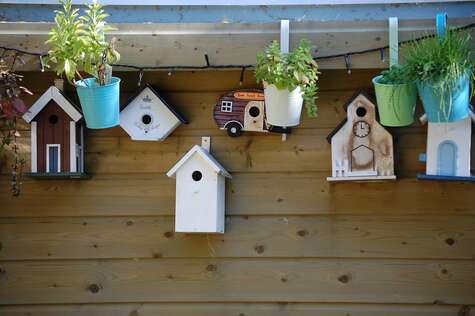
First of all it is essential to place the bird table away from fences or large hedges where cats can easily get to. The table should be placed near a small bush towards the rear of the garden, this will allow the birds to be undisturbed and give them avid space to lookout for other birds on the lookout for food. If possible bird tables should be placed as high as possible to avoid cats and other wildlife climbing onto it, to further avoid the risk of other wildlife attacks, prickly bushes should be placed around the bottom of the table.

Plant wildlife-friendly vegetation, such as prickly bushes and thick climbers in the garden to provide secure cover for birds. These should be close enough to where birds feed to provide cover, but not so close that cats can use it to stalk birds.  This kind of planting may also provide food and nesting sites.

The Need for Water

Like all living things, birds need a regular supply of water to survive. A bird bath mounted on a plinth, a ceramic water dish, or hanging water dishes are some of the most common uses to hold water for birds. It is also important that the edges of each of the equipment are slightly sloping with rough sides to help them grip on.

Post info

Tags:
Categories: garden science , gardening

Frogs

By Dane on Aug 23 2010 | 0 Comments

Frogs

There are more than 5,000 recorded species of frog (order Anura) in the world, their habitats extending worldwide although they do not occur in the Antarctic nor are they present on many oceanic islands. They are tail-less amphibians; characterized by long hind legs, webbed feet, protruding eyes and a short body. They feed mostly on insects such as crickets, moths, flies and mosquitoes – although larger types of frog have been known to eat small turtles and even other small frogs.

They are capable of jumping incredible distances, with some recorded as leaping over 50 times their body length. This is due to their long hind legs and the way their tarsals, tibia and fibula have fused together to form a singular, strong bone. The bones in the frog’s forelimbs are also merged together in order to absorb the impact of each jump

The Frog Life Cycle

There are four main stages of the frog life cycle: egg, tadpole, metamorphosis and adult. It takes around 70 to 80 days for the frog to complete the egg to egg process.

When sexually active, the adult frogs will breed at a water source such as a stream or a pond. The males will make their signature mating call, a low croak, which will then attract nearby females. Once assembled, the male and female undergo their form of mating called ‘amplexus’, which results in a mass of upto 2000 gelatinous eggs that we call frogspawn. After about a week, these aquatic eggs will hatch and become tadpoles.

Tadpoles have oval bodies and long, flat tails. They are typically herbivores, feeding on algae within their native pond. However, there have been instances of some species being carnivorous at the tadpole stage, feeding on small insects and even other tadpoles. Those who develop legs early may be eaten by other tadpoles in order for them to survive longer.

After reaching the end of the tadpole stage, the frogs transition into adulthood through process of metamorphosis. They develop hind legs, front legs and then lungs. Their intestines change as their diet switches from herbivore to carnivore, followed by a change in their eyes in order to provide the frog with binocular vision. Finally, the frogs lose their tail and reach the adult stage.

Two tadpoles in the metamorphosis process

After reaching full maturity, the adult frogs will either leave the water for dry land, or continue to stay in their aquatic habitat. They will seek out invertebrates such as arthropods and gastropods, sometimes capturing prey with their hands and forcing it into their mouths, sometimes using their sticky tongues to catch fast-moving prey.

Frogs themselves are often preyed upon by birds, snakes, foxes, badgers and fish. Whilst it is not certain how long a frog can live for in the wild, they have been recorded to live for over 40 years in captivity.

Chytridiomycosis

There is a rapidly spreading disease called chytridiomycosis that is affecting amphibian populations the world over. Spread by a specific type of fungus (chytrid), the lethal disease spreads to such amphibians as frogs and salamanders through water or moist environments (seen as unusual as this particular form of fungus does not normally affect vertebrates).

“An extinction event on a scale equivalent to that of the dinosaurs”

Chytridiomycosis kills by targeting the skin. Upon contracting the disease, the animal’s skin begins to thicken due to a change in the protein ‘keratin’. As frogs and salamanders often breathe and drink through their skin, this essentially suffocates the animal, causing an abnormal level of electrolyte levels.

Chytridiomycosis is a very high risk to the survival of certain amphibian species, with the International Union for Conservation of Nature calling it “the worst infectious disease ever recorded among vertebrates in terms of the number of species impacted, and its propensity to drive them to extinction.” With such diseases as this coupled with the loss of their habitat, it is important to do what we can in order to prevent such amphibious creatures from dying out.

Frogs in the Garden

Due to these natural and manmade threats, allowing frogs to live in our garden not only brings in a touch of wildlife, but can also help prevent their numbers from diminishing. They need moisture, food, shelter and a place to mate, so making a few changes will make it possible for almost any garden to become a safe frog haven.

Pond

A pond should be around 2-3 feet in depth in order for it to be accommodating for frogs. The edges should be shallow in order for them to get in and out with ease, and there should be moist, rough vegetation in close proximity where the frogs can find food and hibernation. It will also be necessary to provide shelter from the summer sun, meaning pond plants such as marigolds and violets will be a welcoming addition. Damp soil around the pond is often required as their skin needs to stay moist in order for them to breathe. Frogs also tend to prefer ponds with no fish.

Food

As highlighted earlier, frogs tend to live on a diet of mainly insects; the same insects who are a nuisance to homeowners and their gardens. Mosquitoes, moths, slugs, snails, flies and even cockroaches can be reduced in numbers by having frogs in the garden and thus potentially saving the job of calling in pest control should the garden/home become infested with insects. Not only does this save money, but it removes the need to use chemicals that could potentially harm grass, plants and flowers.

Surrounding area

Although it is necessary to have a pond in the garden to attract frogs, it is actually the surrounding area in which they will spend the majority of their lives - so forming piles of leaves, rocks and other debris will provide a place for frogs to forage and shelter in. Using toxic substances in the garden is not advisable due to the way in which frogs breathe through their skin – such pesticides as slug pellets are no longer necessary anyway due to the fact that slugs are eaten by frogs. In keeping with their desire for the damp, they will often choose to spend their time in the moist, humid atmosphere of the greenhouse.

Maintenance

Although having frogs in the garden can be a pleasure and many will strive to maintain a comfortable environment for them, there are a few things to avoid in order to keep them safe and healthy.

For example, grass should be kept short at all times, as frogs will sometimes shelter in long grass which puts them at risk when mowing or strimming is required. Keeping it a short length will make it easier to spot any foraging frogs before they meet a rather grisly end.

It is not a wise idea to remove a frog its original habitat and place it in a different one, as it will most likely die or migrate. If a garden offers their basic needs then frogs will arrive naturally over time – trying to force them into a new environment will not work.

Finally, if a frog is spotted motionless at the bottom of a pond during winter, then do not attempt to retrieve it. Frogs hibernate during the winter, and some males will bury themselves in mud and lie dormant at the bottom of the pond. Removing the frog will disturb its hibernation process and potentially kill it.

Having frogs in the garden does not require too much maintenance but they are relatively fragile creatures so by following the advice here, the perfect garden environment can be created in which they can prosper.

Post info

An Introduction to Lichens

By Jimmy on Jan 08 2010 | 0 Comments

Lichens are a fascinating part of all our garden spaces, here you will find a basic introduction to these prehistoric life forms.

Introduction to Lichens

If I were to tell you that a body far more advanced and complex than our own, formed with no less than two species and continuing to breed at the ripe old age of 400 million years, had been discovered swarming in it’s millions right here on earth, I should imagine you may become intrigued if not alarmed. Indeed, it would appear that the closest thing to alien existence that the public have ever heard of has at last come to light. However, should I then tell you that this alien race was in fact made up of the different types of lichen which exist in their millions here on earth, that excitement would undoubtedly be extinguished. This truth is what privileges me to enlighten you in the fascinating subject of lichen and the extraordinary ways in which it has been used.

Lichen field, photo: Kerry Woods


What is Lichen?

The subject of lichen is not renowned for being the most fascinating or stimulating topic of interest; in fact, lichen is not well known at all. Commonly confused with moss or fungus, lichen is an organism that is more often than not completely ignored by society. A lichen is a unique and specific structure, formed primarily by a mycobiont (fungus) and a photobiont (alga or cyanobacterium) and is admired as the one of the most efficient colonisers on the planet. As lichens are able to survive in harrowing environments, for example the sub zero conditions of mountain ranges, they have proven to be some of the most tolerant, advanced and important structures in existence. And with an estimation of more than 25,000 different species of lichen, it is unquestionable that we will all encounter a lichen species at some stage during our every day activities - and yet they remain unnoticed. Easily overlooked, the most fascinating qualities of lichen have not been brought to the public’s eye, despite the fact that 8% of the world today is covered in lichen. Nonetheless, scientists have investigated the organism, and as a consequence lichen has been discovered to be an invaluable tool to our world’s industry.


Reindeer lichen (Cladonia rangiferina)

Reindeer lichen (Cladonia rangiferina)


Lichen in industry.

The variety of different uses of lichen are astonishing; ecologists in Europe rely on lichen as a reliable source to determine the levels of air quality and pollution - lichens are extremely sensitive to man-made gases and pollutants, therefore providing a good measure of how contaminated an area may be. Furthermore, in Japan it is not uncommon to find lichen on the dinner menu: the lichen species Umbilicaria esculenta is frequently used in soups and salads. Remarkably, lichen is predominantly a carbohydrate and yet is 0% in fat. Equally partial to this unusual diet, reindeer will often be found feeding on Cladonia rangiferina (shown above), which is found primarily in areas of alpine tundra. Indeed, deer in general are unique in that they contain a specific enzyme known as ‘lichenase’ which enables them to digest lichen effectively. The benefits of lichen stretch as far as the fashion industry; ‘Roccella’ is a dye used to create blue and red fabrics and is formed by numerous lichen species (most likely Xanthoria and Cladonia), it is estimated that 9,000 tonnes of lichen (largely from Evernia prunastri and Pseusdevernia furfuacea) are used in the perfume commerce alone.

Perhaps one of most extreme and expensive lichen experiments to take place was in 2005 as a part of a space investigation. That year the European Space Agency embarked on a mission to test the versatility of lichen in the space environment. The test formed part of an investigation of the panspermia theory (the transferring of a species to another planet). Previously, certain forms of bacteria had proven to be too weak to stand the extreme conditions of space; however, it was suggested that certain species of lichen (Rhizocarpon georgraphicum and Xanthoria elegans) would be more successful. Therefore on the 31st of May a Russian Soyuz rocket transported the two species into space, where scientists subjected them to photon 2 emissions, high UV ray exposure and extreme cosmic radiation- all of which the species endured successfully and suffered no changes. The break-through gave an enormous boost to the panspermia theory, and encouraged the idea that scientists one day would be able to transport living organisms to Mars. 


Xanthoria parietina

Maritime sunburst lichen (Xanthoria parietina), found in coastal areas


Further Reading

·        Lichen Reproduction

·        Air Pollution Indicators

·        Lichen in Space

·        Dyeing with Lichen

·        Obama’s Lichen

·        The Virginia Lichen Project


Lichen in medicine & further research

Due to their adaptability, lichens have been discovered and utilised on almost every continent, with many cultures finding their own use for the organisms. The relationship between lichen and human has its own branch of research known as ethnolichenology, further reiterating its importance in our environment. As a medicine, lichen is most useful when certain elements, known as secondary compounds, are extracted from the species and exploited as a particular treatment. This is commonly in the form compounds such as usnic acid, an antibiotic compound found in many lichen species - approximately half of all lichens contain this compound and/or other antibiotic properties. Other secondary compounds include bacteria killing toxins and pigments which can help reduce the effects of harmful exposure to sunlight. Lichens are commonly mistaken as the causes of Lichen sclerosus, though the skin condition is thought to be due to an overactive immune system and unrelated to lichens themselves.


The field of lichenometry has given scientists valuable tools when researching into the age of geological entities.  It is estimated that lichen can be preserved for up to 10,000 years and due to our understanding of its growth, one can extract information about the body it is using to grow on. A variety of methods allow us to determine the ages of rocks, changes in water levels, glacial deposits, rock falls and more.

In sum therefore, the utility, flexibility and commercial wealth of the seemingly lowly lichen should not be under estimated.  Whilst its uses and benefits do not enjoy widespread exposure, the remarkable existence of such an unusual life form should be neither over-looked nor marginalised.  From essential nutrition, to ground breaking scientific expansion, lichen is responsible for an extremely diverse number of modern day developments.


Post info