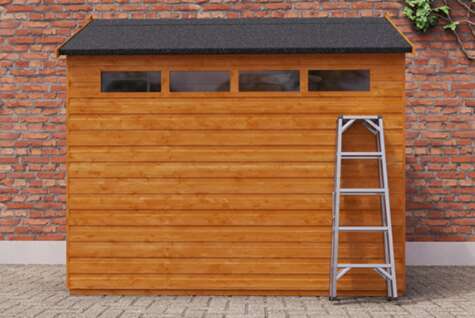
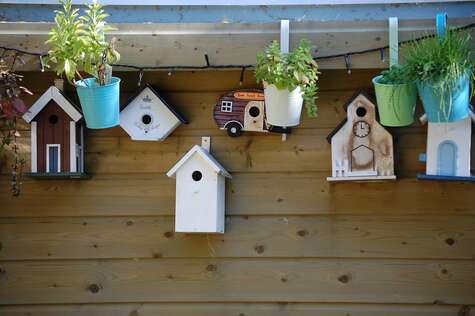
Feeling Inspired By The Shed Of The Year Competition?

By Max on Jul 06 2011 | 0 Comments


A garden shed doesn’t just have to be used for gardening; it can be your own private area of serenity, your little home from home and your ticket out of doing housework. I'd like to explore the standard conventional uses of garden sheds and the wilder more creative sides to this wooden house of fun!

Who says sheds are simply for storage of garden equipment?

Well not Reg Miller, thats for sure. He was voted to have “The Best Shed 2010” - which is really something when he was competing against some really esoteric and crazy designs.

And it’s not just Reg getting involved. People all over the country are having a go and attempting to “Pimp” their shed to really get the most out of it. More recently we've seen John Earl - aptly dubbed 'Shed Zeppelin' - win the 2011 competition with his World War One billet: where he features live bands and films them for his website 'Songs From The Shed'. John even boasts that he's had a "26 strong gospel choir" play his renowned shed!

Picture from The Independent.

Even if you’re not into “Pimping up” your garden shed like Reg or any of the other competitors, you don’t have to conform to the standard conventional method of having to “use the garden shed for garden related issues”. There are many other uses for your lumber dream house. For example: Alan Cook in Market Harborough (UK) has created a really modern and hi-tech shed; Sky HD Television, Games console, Fridge, Lazeeboy Chair, Broadband and now a mini gym are just some of the kit he is packing in his tidy timber hut. He claims his wife was against it at first - but when she realised that she had the run of the house for cleaning etc, she loved the fact that he wasn’t under her feet!

If your needs aren’t satisfied by this, then look toward possibly the family incorporating use of the garden shed, possibly a “play time” area for younger children, or even a homework area for teens revising for their exams. However, not everyone has children - so how about a miniature pub or a miniature library? Get some mates round or kick back with quiet novel.

At the end of the day: it’s your shed, it’s your choice!

Post info

Tags:
Categories: Garden , General

Top 10 Garden Resource Blogs 2011

By Arron on Apr 27 2011 | 1 Comments


With the summer sun well upon us, it's time for the avid green fingered gardeners to prepare their garden.

In order to find the best community base to prepare us for the summer, we have launched a competition to find out the best gardening blog of 2011!

After months of research the following 10 blogs & communities were identified (in no particular order):


1) The Guardian Gardening Blog

The Guardian's Gardening blog has been around for many years, and is regularly updated by popular gardening editors with useful gardening related content.

Find one of their recent posts here.


2) Digging

This United States based gardening resource is owned by Pam, a Texas based gardener. She has developed her garden environment for many years, and regularly posts content on her gardening journey.

Find one of her recent posts here.


3) Veggie Gardening Tips

Veggie Gardening Tips is a gardening portal for useful tips and advice on how to grow vegetables naturally and organically, the blog has some excellent guides on how to grow certain vegetables effectively.

Find one of their recent posts here.


4) Gardeners World Blog

Gardeners World is a BBC owned gardening portal. World gardening experts regularly update the blog with essential tips and advice for gardening related matters, making it a very trusted resource for gardening enthusiasts.

Find one of their recent posts here.


5) GrowsonYou

GrowsonYou is a gardening based community & blogging resource where members can share their gardening tips and tricks with one another.

Find one of their recent posts here.


6) Guerilla Gardening

Guerrilla is an interesting community base, which encourages the creation of gardening in public areas such as on side streets and roundabouts. The blog is frequently updated by members who have come across attractive looking public gardens and flower patches.

Find one of their recent posts here.


7) Cold Climate Gardening

Cold Climate Gardening is a unique gardening resource which offers tips and advice for gardeners who live in cold climates. The blog has a wide range of posts relating to cold climate gardens and how they can be brought to life despite their unfortunate cold temperatures.

Here is one of their recent posts here.


8) Gardening Gone Wild

Gardening gone wild is an internationally recognised gardening blogging community in which aims to 'inspire and inform' its readers with a global perspective on all things gardening.

Find one of their recent posts here.


9) A Way to Garden

A Way to Garden is maintained by garden enthusiast Margaret Roach, she was earlier awarded best garden book of the year in 1998, and her success has continued with her gardening blog, which has a high number of regular subscribers.

Find one of her recent posts here.


10) Garden Rant

Garden Rant is a well known gardening blogging network which has won a number of best blog awards in the past. The blog is regularly updated by four gardening editors who have created a huge following among the gardening network.

Find one of their recent posts here.


To cast a vote for your favourite gardening resource, simply use the form below to vote.

The end date for the competition is  29th June 2011, so make sure your vote counts! Once the results are collected, the top garden blog of 2011 will be revealed!


Post info

Tags:
Categories: Garden , gardening , General , Summer

Planning a Summer BBQ

By Thom M on Apr 08 2011 | 2 Comments

Now the weather is starting to pick up and we are starting to sweat, many of you are starting to plan BBQs. The idea of a BBQ sounds very simple, but it is in fact a complex Art, with you and your ideas being the key to success. Throwing any event can be risky business, potentially opening the eyes of your friends to the fool you may actually be (I’m only joking here, they probably know that already). Getting a BBQ right can, at least for an evening, make you seem like you are the greatest person in the world. So here it is, what I hope will be a nice and fun (yet informative) guide to throwing a BBQ party.

Planning

The first place to start is planning your BBQ. Poor planning has the potential to be fatal, not literally fatal, but at least socially. You need to figure out what you need, the minimums of which are:

·       A BBQ

·       Food

·       Drink

These may seem simple, but you will be surprised how many times I have seen friends get these wrong. I’m going give Food and Drink their own little section as they require quite some depth when discussing. First I will start with the BBQ.

You don’t really want a disposable BBQ you want a real BBQ, those disposable ones make you look like you don’t care for the environment, by using a more permanant BBQ you are still burning coal, but not throwing away as much cardboard and foil in the process. Plus they don’t stay hot for long, definitely not long enough to cook food to any sort of edible standard. What you need is something very big, something that will cook a lot of food. A product built to last.


(I think that maybe, just maybe, this may be a little too far)

When everyone arrives they will all pretty much want their food straight away. I am not an impatient person, but find me at a BBQ and I’ll probably be circling around the food like a vulture. As soon as the possibility of your food being cooked arises you will quickly find yourself getting very hungry, and so will your guests. This happens to more people than they realise. The quicker you can get the food out once your BBQ starts the better.

Timing is your next, very important, factor to planning. A great deal of this is which day you plan to do your BBQ. I recommend a Saturday. Each day of the week has advantages and disadvantages, so it’s all about working out which one is right for you. Monday through Friday, for many of your guests, will be days that they work, if you don’t finish until five o’clock and the traffic doesn’t allow you to get home until at least six o’clock, you will probably find yourself still setting up at eight o’clock, struggling with the instructions for an incredibly complicated and frustrating gazebo. The advantages of a Friday though is that it allows your guests to drink with the knowledge they are not at work the next day, the only other day that really allows this is Saturday, which you have to be very unlucky to work. There is one key issue with a Saturday though, which is pretty much unavoidable - sport.

Saturday, is synonymous with sport, at least for certain friends of mine. Ask them to do anything at three in the afternoon and the only response I get is “I’m sorry, I can’t, I’m watching the game” this is fine though, not really a big deal, you could if you like, even centre your BBQ around ‘the game’. This leaves you with the question of what to do with your non-sports-fan-friends, they probably won’t enjoy ‘the game’. The answer is simply inviting them and make sure you don’t forget about them, maybe make sure there is a little group of non-sports-fan-friends to entertain each other.

Another alternative is simply organising your BBQ to be after anything, which may be taking place in the afternoon that people may find difficult to avoid doing. A good time to aim for is about six o’clock in the evening. Six o’clock is good because it allows for different people’s eating patterns. I know many people who eat their evening meal around five and those that eat around nine. This way your BBQ should be hot and ready by around seven, making it equal for both extremes. Tell your guests to arrive for six. You may be thinking ‘won’t everyone turn up early?’ but, no, they won’t. A few will, but these will typically be those people, like myself, who don’t mind turning up early, we’re used to it, in fact, we like to turn up early, you can expect most people to run late, but arrive just in time for BBQ being ready at seven. These early comers will more than likely also help you with any tasks you still have left before everyone else arrives. It makes us feel good.

You want to make your garden have atmosphere for the BBQ, somewhere your guests feel like they can enjoy them selves. Gazebos are good because if the worst happens and it rains (and it always does!), your friends have somewhere to huddle and wait it out if they can’t make it indoors. Chairs are a must. If your friends are drinking, there will probably come a point were it is best for them to sit down, I usually have a seating area within the gazebo, I find this often helps with preventing your friends turning into lobsters. One word of advice, don’t try to BBQ under the gazebo (or next to a garden shed for that matter).

Food

The main ingredient of any great BBQ, kind of speaks for itself, but is often taken for granted. You have too opposing options when it comes to the food – economy or up market. I suggest something in the middle. Why this middle ground you may ask. Well, going down to the supermarket and buying the cheapest food you can, has obvious advantages. But if you want to impress, you want to provide food people will actually enjoy. This doesn’t mean buying the best you can from an organic butcher’s shop though because at the end of the day, your guests are more than likely going to drown the poor thing in ketchup. A nice middle ground offers burgers and sausages that won’t be several times smaller than they first appeared whilst making your guest feel less guilty when pouring that mustard in. You can always tell people to bring their own food, leaving the choice of quality up to them, but this often leads to chaos and confusion about who’s food is who’s and a mad rush to get theirs on the BBQ first. You can also guarantee that some people will just not bring any. By buying your own you have complete control and can just keep cooking away.

I would recommend asking any vegetarians you know to bring their own food. This isn’t some sort of anti-vegetarian statement or anything; it’s more of allowing them their personal preference. I was vegetarian for many years and throughout this time there were many brands I encountered that were very nice, but also many brands that weren’t. If I turned up to a BBQ and the host had bought vegetarian food for the vegetarians, you could guarantee it was going to be one of the brands I didn’t like.

Next on your list, are sauces. Everyone loves a good sauce, yet everyone differs in their favourites. Classics such as Ketchup, Mayonnaise, Mustard, Brown Sauce, and Relish are all musts. What I like to do is throw in sauces that may surprise people, throw them off guard. These include, Sweet Chilli Sauce, Horseradish, Salad Cream, Hot Pepper Sauce, Pickle, Piri Piri, Reggae Reggae and strange variations of traditional sauces, this way you allow your guests to create whatever they want. You will be surprised at some of the concoctions and this will ultimately start many conversations.


(Just thinking about BBQ food makes me very hungy.)

The other decision you have to make with food is elements such as Salads and side dishes. This comes from knowing your guests, but I have never thrown a BBQ were these were really eaten. I often fall back on the classics such as coleslaw and potato salad because at the end of the day, any leftovers I will happily eat on my own. Thinking about salads I am always reminded of a Simpsons episode with a wonderful song “you don’t make friends with salads”. I have to admit, The Simpsons are right.

Drink

No party is complete without drinks, whether these are alcoholic or non-alcoholic. Many people, like with food, will not bring any, but I have generally found that most people will. It does help to be stocked up. If you have drinks to offer your guest, you will instantly win friend points (more than likely you will also be able to get them to return the favour), creating a better atmosphere. Stick with the classics – Cider, Beer and Wine for the alcoholic and Cola, Lemonade and Juice for the non alcoholic. You may also need some extra of these non-alcoholic drinks for those that like to drink spirits. Always buy much more than you need and keep a reserve. This way your guests will not be able to abuse your generosity and you will be able to offer more if the supply has run down, but your gathering, is nowhere near over. Like the food, don’t go for anything too cheap, I would usually go for drinks that I like, so any leftovers are there for me to enjoy.


Don’t forget the ice. Ice alone will make you a legend.

Music

I left this from the list earlier, because it is an almost strange anomaly. Sometimes you need music, sometimes you don’t. If conversation is booming, music can often end up being a distraction, getting drowned out in the background. Sometimes the music is the life of a social event. I have to agree with the latter. The problem with music though is that everyone like something different and you can’t please everyone with the same genre (it is things like this that make people so interesting and fascinating). I find nostalgic music is your best bet. Music from a specific time gone by that you all have connections to, not only sparks conversation, but makes people very happy. Whenever I hear a song from my youth for example, I just want to dance. When I hear this song with my friends, we do dance. Find these songs for your group of guests and run with it, trust me on this, I’m an expert.

And there we have it, a guide to throwing the perfect summer BBQ. Have fun and remember, to wear sunscreen because as well being more embarrassing than you realise, sunburn can have very serious long-term effects.

Thom M

(Thom holds no responsibility for your BBQ not being a success)

Post info

Categories: Garden , General

Dog Kennels - Protecting Your Pooch

By Thomas on Feb 16 2011 | 0 Comments


Dog kennels are well renowned as the most successful way to train your dog. Proper use can ensure that a new dog becomes a fantastic addition to your new home. Dogs can live happy and healthy lives in outdoor conditions, and a kennel has to be the ideal way to achieve this - helping ensure that dogs aren't left tied up outside in the rain. Choosing the right kennel is a fundamental part of accepting a new dog into your new home.

Why are kennels important?

- Wild dogs have always instinctively settled in caves and dens. A kennel can provide the equivalent - a safe, welcoming area for your dog to settle in comfort.

- Dogs, especially puppies, are typically mischievous! Making sure they have their own space will reduce any negative impact their introduction has on your home - while making it less likely they're eating/doing something they shouldn't! Kennels typically help rectify any problems associated with destructive behaviour.

- Not forgetting...they look good! A good looking kennel can compliment the family garden and add some well needed character alongside your garden sheds, conservatories or patios.


What tips should I follow when buying/installing a new kennel?

- Make sure the kennel you buy/build allows your dog the right amount of space. Your dog should be able to stand in their kennel, though it shouldn't be so spacious as to provoke anxiety.

- Make sure your kennel is appropriate for your dog. Wooden dog kennels typically have a natural, earthy feel - and are much better insualtors than metal or concrete kennels. However, when buying a wooden dog kennel you should ensure that the kennel floor is raised above the ground, to prevent it from soaking up any moisture.

- Ensure your dog is comfortable with their kennel through initial, supervised, short visits. Gradually increase the amount of time they spend in their kennel as required.

- Always provide your dog with the right amenities. Your dog will typically need a blanket for warmth - as well as the usual food and water.


Following these tips should allow your dog to lead a happy and healthy outdoor life. Good luck and all the best with your new pooch!


Post info

Categories: gardening , General , sheds

Frogs

By Dane on Aug 23 2010 | 0 Comments

Frogs

There are more than 5,000 recorded species of frog (order Anura) in the world, their habitats extending worldwide although they do not occur in the Antarctic nor are they present on many oceanic islands. They are tail-less amphibians; characterized by long hind legs, webbed feet, protruding eyes and a short body. They feed mostly on insects such as crickets, moths, flies and mosquitoes – although larger types of frog have been known to eat small turtles and even other small frogs.

They are capable of jumping incredible distances, with some recorded as leaping over 50 times their body length. This is due to their long hind legs and the way their tarsals, tibia and fibula have fused together to form a singular, strong bone. The bones in the frog’s forelimbs are also merged together in order to absorb the impact of each jump

The Frog Life Cycle

There are four main stages of the frog life cycle: egg, tadpole, metamorphosis and adult. It takes around 70 to 80 days for the frog to complete the egg to egg process.

When sexually active, the adult frogs will breed at a water source such as a stream or a pond. The males will make their signature mating call, a low croak, which will then attract nearby females. Once assembled, the male and female undergo their form of mating called ‘amplexus’, which results in a mass of upto 2000 gelatinous eggs that we call frogspawn. After about a week, these aquatic eggs will hatch and become tadpoles.

Tadpoles have oval bodies and long, flat tails. They are typically herbivores, feeding on algae within their native pond. However, there have been instances of some species being carnivorous at the tadpole stage, feeding on small insects and even other tadpoles. Those who develop legs early may be eaten by other tadpoles in order for them to survive longer.

After reaching the end of the tadpole stage, the frogs transition into adulthood through process of metamorphosis. They develop hind legs, front legs and then lungs. Their intestines change as their diet switches from herbivore to carnivore, followed by a change in their eyes in order to provide the frog with binocular vision. Finally, the frogs lose their tail and reach the adult stage.

Two tadpoles in the metamorphosis process

After reaching full maturity, the adult frogs will either leave the water for dry land, or continue to stay in their aquatic habitat. They will seek out invertebrates such as arthropods and gastropods, sometimes capturing prey with their hands and forcing it into their mouths, sometimes using their sticky tongues to catch fast-moving prey.

Frogs themselves are often preyed upon by birds, snakes, foxes, badgers and fish. Whilst it is not certain how long a frog can live for in the wild, they have been recorded to live for over 40 years in captivity.

Chytridiomycosis

There is a rapidly spreading disease called chytridiomycosis that is affecting amphibian populations the world over. Spread by a specific type of fungus (chytrid), the lethal disease spreads to such amphibians as frogs and salamanders through water or moist environments (seen as unusual as this particular form of fungus does not normally affect vertebrates).

“An extinction event on a scale equivalent to that of the dinosaurs”

Chytridiomycosis kills by targeting the skin. Upon contracting the disease, the animal’s skin begins to thicken due to a change in the protein ‘keratin’. As frogs and salamanders often breathe and drink through their skin, this essentially suffocates the animal, causing an abnormal level of electrolyte levels.

Chytridiomycosis is a very high risk to the survival of certain amphibian species, with the International Union for Conservation of Nature calling it “the worst infectious disease ever recorded among vertebrates in terms of the number of species impacted, and its propensity to drive them to extinction.” With such diseases as this coupled with the loss of their habitat, it is important to do what we can in order to prevent such amphibious creatures from dying out.

Frogs in the Garden

Due to these natural and manmade threats, allowing frogs to live in our garden not only brings in a touch of wildlife, but can also help prevent their numbers from diminishing. They need moisture, food, shelter and a place to mate, so making a few changes will make it possible for almost any garden to become a safe frog haven.

Pond

A pond should be around 2-3 feet in depth in order for it to be accommodating for frogs. The edges should be shallow in order for them to get in and out with ease, and there should be moist, rough vegetation in close proximity where the frogs can find food and hibernation. It will also be necessary to provide shelter from the summer sun, meaning pond plants such as marigolds and violets will be a welcoming addition. Damp soil around the pond is often required as their skin needs to stay moist in order for them to breathe. Frogs also tend to prefer ponds with no fish.

Food

As highlighted earlier, frogs tend to live on a diet of mainly insects; the same insects who are a nuisance to homeowners and their gardens. Mosquitoes, moths, slugs, snails, flies and even cockroaches can be reduced in numbers by having frogs in the garden and thus potentially saving the job of calling in pest control should the garden/home become infested with insects. Not only does this save money, but it removes the need to use chemicals that could potentially harm grass, plants and flowers.

Surrounding area

Although it is necessary to have a pond in the garden to attract frogs, it is actually the surrounding area in which they will spend the majority of their lives - so forming piles of leaves, rocks and other debris will provide a place for frogs to forage and shelter in. Using toxic substances in the garden is not advisable due to the way in which frogs breathe through their skin – such pesticides as slug pellets are no longer necessary anyway due to the fact that slugs are eaten by frogs. In keeping with their desire for the damp, they will often choose to spend their time in the moist, humid atmosphere of the greenhouse.

Maintenance

Although having frogs in the garden can be a pleasure and many will strive to maintain a comfortable environment for them, there are a few things to avoid in order to keep them safe and healthy.

For example, grass should be kept short at all times, as frogs will sometimes shelter in long grass which puts them at risk when mowing or strimming is required. Keeping it a short length will make it easier to spot any foraging frogs before they meet a rather grisly end.

It is not a wise idea to remove a frog its original habitat and place it in a different one, as it will most likely die or migrate. If a garden offers their basic needs then frogs will arrive naturally over time – trying to force them into a new environment will not work.

Finally, if a frog is spotted motionless at the bottom of a pond during winter, then do not attempt to retrieve it. Frogs hibernate during the winter, and some males will bury themselves in mud and lie dormant at the bottom of the pond. Removing the frog will disturb its hibernation process and potentially kill it.

Having frogs in the garden does not require too much maintenance but they are relatively fragile creatures so by following the advice here, the perfect garden environment can be created in which they can prosper.

Post info

Have you ever wondered exactly how much a shedload actually is?

By Jimmy on Jul 08 2010 | 0 Comments

Have you ever wondered exactly how much a ‘shedload’ actually is?


A shed load of money is actually

With a shedload of money, you could buy the equivalent of almost...

(a £12million recent purchase by DJ Chris Evans)

It would take David Beckham an estimated...

...to earn a shed load of money (based on his estimated £25 million+ a year current income sportbusiness.com)

At the end of 2009 the UK government debt was the equivalent of

(£950.4Bn, statistics.gov.uk)

If we stacked all those shedloads full of money on top of each other vertically, those sheds would reach 64,435 feet!

Or...

That’s right into the stratosphere, well above where commercial airliners fly

A shed load of Vodka would work out to be an astonishing

Shockingly, the UK population (18 to retirement age) consumes the alcohol equivalent of a shed load of vodka every 3 minutes 21 seconds

Just enough for a football team!

There were

at the 2010 World Cup in South Africa


In keeping with the World Cup, a very noisy shed load of

Victoria Beckham is thought to own around

She would need to almost double her collection in order to have a shedload of shoes

It would take the shoe collections of 72 average women to make a shedload of shoes

A shed load of Tigers would contain the equivalent of

(Shed load of South China Tigers = 3, there are just 18 left)

If you want to help save China’s tiger population, please visit this site...


* All these figures are factual and based on a 8ft x 6ft shed from Tiger Sheds

**Shedload of money was based upon the dimiensions of a £20 note


Post info

Tags:
Categories: General , sheds

Photosynthesis

By Arron on Jun 24 2010 | 0 Comments

All living organisms need a source of food for their continued existence and well being. The way in which plants obtain food is by producing it themselves through a process called Photosynthesis. In simple terms plants use the raw materials Carbon Dioxide, & Water, to produce Glucose, and Oxygen both essential to any living being not just plants.

These raw materials (Carbon Dioxide & Water) enter the cells of the leaf, which produces Glucose & Oxygen, and then leaves the leaf.

In more complex and mathematical terms the following formula can be associated with the Photosynthesis process

6H2O + 6CO2 → C6H12O6+ 6O2

A question which crops up heavily is why are the leaves of plants green?  

Well the answer is quite straight forward; due to the presence of the chemical Chlorophyll in the plants leafs, during the process of Photosynthesis, Chlorophyll absorbs red and blue wavelengths. The colour green itself is reflected from these wavelengths, making the colour appear green to the naked eye.


Chlorophyll itself is an important factor to the photosynthesis process, as it catches the rays of the sun, and coverts it to glucose of which contains sugar - which in turn provides useable energy.

Photosynthesis – Step by Step

In more complex terms the diagram represents each individual cell within the leaf of a plant, at first glance it does look quite overwhelming – however here is a short and precise guide as to which cells are involved with Photosynthesis:

-     The water given to plants (e.g. when they are watered) travels up the root of the plant, (stomata) and through the cell Xylem.The job of this cell is to simply transfer the water from the roots to other parts of the plant

-     Carbon dioxide cannot enter through the top layer of the leaf (Cuticle) and so can only enter through the stoma

For further reading on Photosynthesis visit - http://en.wikipedia.org/wiki/Photosynthesis

Post info

Categories: gardening , General

The Fascination with Orchids

By Arron on May 26 2010 | 0 Comments

If you have ever wondered how roses have a vast family of species. Take a moment to think about the Orchid family of flowers, which are said to have an astonishing variety of around 30,000 known species, larger than any other known plant. These fascinating plants can grow in any given climate from the sustained warmth of the tropics to the cold temperatures in North America, due to their capabilities of adapting to such conditions they have formed a huge family of species all over the world. Many types of Orchids can be seen within the tropics of the jungle; they tend to grow on the trunks or on the branches of trees.

The Orchid is said to signify many things; love, wisdom, beauty and thoughtfulness. Notably, a pink Orchid is said to convey affection, and is more commonly used for celebrations such as mother’s day.

The continued fascination of the Orchid goes back 100’s of years when they were hunted and collected. Orchids would be looked after on a daily basis, ensuring that the flowers were kept and maintained in the best condition possible. This fascination is known to many gardeners as the ‘Obsession with Orchids’.

 Some of the better known & popular Orchids are:

-          Phalaenopsis

-          Zygomorphic

-          Vanda

-          Cymbidiums

-          Dendrobiums

Orchids have perhaps become quite complex to most, however the structure of these flowers are very similar; they have three sepals and three petals, however the middle of the plant is significantly different across all species.

 Categories of Orchids

Epiphytic Orchids – These Orchids grown on tree trunks only, they do not harm the tree but only rely on it for support and a healthy span of growth. Due to their formation of growth they do not receive a regular supply of water from the soil, however the Epiphytic unique tissue called velamen in its roots, helps the Orchid store enough water for sustained growth.

Lithophytic Orchids – Can be seen with cracks of trees and rocks, they utilises decaying mosses by absorbing their nutrients for growth and health.

Terrestrial Orchids – These types of Orchid grow underground, similar to Litophytic Orchids, they get their nutrients from fungus.


Further reading for Orchids - http://orchidlady.com/main.html

Post info

Tags:
Categories: gardening , General

An Introduction to Lichens

By Jimmy on Jan 08 2010 | 0 Comments

Lichens are a fascinating part of all our garden spaces, here you will find a basic introduction to these prehistoric life forms.

Introduction to Lichens

If I were to tell you that a body far more advanced and complex than our own, formed with no less than two species and continuing to breed at the ripe old age of 400 million years, had been discovered swarming in it’s millions right here on earth, I should imagine you may become intrigued if not alarmed. Indeed, it would appear that the closest thing to alien existence that the public have ever heard of has at last come to light. However, should I then tell you that this alien race was in fact made up of the different types of lichen which exist in their millions here on earth, that excitement would undoubtedly be extinguished. This truth is what privileges me to enlighten you in the fascinating subject of lichen and the extraordinary ways in which it has been used.

Lichen field, photo: Kerry Woods


What is Lichen?

The subject of lichen is not renowned for being the most fascinating or stimulating topic of interest; in fact, lichen is not well known at all. Commonly confused with moss or fungus, lichen is an organism that is more often than not completely ignored by society. A lichen is a unique and specific structure, formed primarily by a mycobiont (fungus) and a photobiont (alga or cyanobacterium) and is admired as the one of the most efficient colonisers on the planet. As lichens are able to survive in harrowing environments, for example the sub zero conditions of mountain ranges, they have proven to be some of the most tolerant, advanced and important structures in existence. And with an estimation of more than 25,000 different species of lichen, it is unquestionable that we will all encounter a lichen species at some stage during our every day activities - and yet they remain unnoticed. Easily overlooked, the most fascinating qualities of lichen have not been brought to the public’s eye, despite the fact that 8% of the world today is covered in lichen. Nonetheless, scientists have investigated the organism, and as a consequence lichen has been discovered to be an invaluable tool to our world’s industry.


Reindeer lichen (Cladonia rangiferina)

Reindeer lichen (Cladonia rangiferina)


Lichen in industry.

The variety of different uses of lichen are astonishing; ecologists in Europe rely on lichen as a reliable source to determine the levels of air quality and pollution - lichens are extremely sensitive to man-made gases and pollutants, therefore providing a good measure of how contaminated an area may be. Furthermore, in Japan it is not uncommon to find lichen on the dinner menu: the lichen species Umbilicaria esculenta is frequently used in soups and salads. Remarkably, lichen is predominantly a carbohydrate and yet is 0% in fat. Equally partial to this unusual diet, reindeer will often be found feeding on Cladonia rangiferina (shown above), which is found primarily in areas of alpine tundra. Indeed, deer in general are unique in that they contain a specific enzyme known as ‘lichenase’ which enables them to digest lichen effectively. The benefits of lichen stretch as far as the fashion industry; ‘Roccella’ is a dye used to create blue and red fabrics and is formed by numerous lichen species (most likely Xanthoria and Cladonia), it is estimated that 9,000 tonnes of lichen (largely from Evernia prunastri and Pseusdevernia furfuacea) are used in the perfume commerce alone.

Perhaps one of most extreme and expensive lichen experiments to take place was in 2005 as a part of a space investigation. That year the European Space Agency embarked on a mission to test the versatility of lichen in the space environment. The test formed part of an investigation of the panspermia theory (the transferring of a species to another planet). Previously, certain forms of bacteria had proven to be too weak to stand the extreme conditions of space; however, it was suggested that certain species of lichen (Rhizocarpon georgraphicum and Xanthoria elegans) would be more successful. Therefore on the 31st of May a Russian Soyuz rocket transported the two species into space, where scientists subjected them to photon 2 emissions, high UV ray exposure and extreme cosmic radiation- all of which the species endured successfully and suffered no changes. The break-through gave an enormous boost to the panspermia theory, and encouraged the idea that scientists one day would be able to transport living organisms to Mars. 


Xanthoria parietina

Maritime sunburst lichen (Xanthoria parietina), found in coastal areas


Further Reading

·        Lichen Reproduction

·        Air Pollution Indicators

·        Lichen in Space

·        Dyeing with Lichen

·        Obama’s Lichen

·        The Virginia Lichen Project


Lichen in medicine & further research

Due to their adaptability, lichens have been discovered and utilised on almost every continent, with many cultures finding their own use for the organisms. The relationship between lichen and human has its own branch of research known as ethnolichenology, further reiterating its importance in our environment. As a medicine, lichen is most useful when certain elements, known as secondary compounds, are extracted from the species and exploited as a particular treatment. This is commonly in the form compounds such as usnic acid, an antibiotic compound found in many lichen species - approximately half of all lichens contain this compound and/or other antibiotic properties. Other secondary compounds include bacteria killing toxins and pigments which can help reduce the effects of harmful exposure to sunlight. Lichens are commonly mistaken as the causes of Lichen sclerosus, though the skin condition is thought to be due to an overactive immune system and unrelated to lichens themselves.


The field of lichenometry has given scientists valuable tools when researching into the age of geological entities.  It is estimated that lichen can be preserved for up to 10,000 years and due to our understanding of its growth, one can extract information about the body it is using to grow on. A variety of methods allow us to determine the ages of rocks, changes in water levels, glacial deposits, rock falls and more.

In sum therefore, the utility, flexibility and commercial wealth of the seemingly lowly lichen should not be under estimated.  Whilst its uses and benefits do not enjoy widespread exposure, the remarkable existence of such an unusual life form should be neither over-looked nor marginalised.  From essential nutrition, to ground breaking scientific expansion, lichen is responsible for an extremely diverse number of modern day developments.


Post info